

01 أبريل, 2026 06:51:06 م
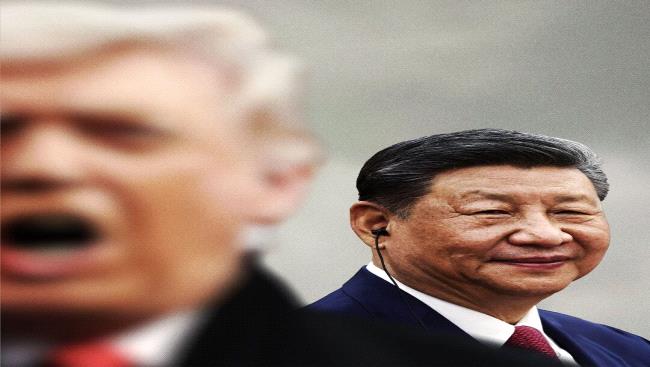
Illustration: The Economist/Getty Images
Never interrupt your enemy when he is making a mistake
The Economist:
GOING TO WAR against Iran promised to change the Middle East by weakening a villainous regime and thwarting its nuclear ambitions. To its most bullish supporters, the war would also change the world by cowing an ascendant China. It would show how America’s control over the flow of oil leaves China vulnerable. And it would boost deterrence by contrasting America’s military supremacy with China’s reluctance or inability to save its friends.
A month into the fighting, this logic still seems misguided and hubristic. Certainly, that is the way it looks from Beijing.
The Economist has been speaking to diplomats, advisers, scholars, experts and current and former officials in China.
Almost all of them see the war as a grave American error. China has stood aside, they say, because its leaders understand the maxim attributed to Napoleon Bonaparte, supposedly uttered as his foes were abandoning high ground at Austerlitz: “Never interrupt your enemy when he is making a mistake.”
Many Chinese say the war will accelerate America’s decline. They see American aggression as a validation of President Xi Jinping’s focus on security over economic growth. And they expect peace, when it comes, to create opportunities for China to exploit. Only in the background is there anxiety—and the hint of a possible Chinese miscalculation.
First, the view in Beijing is that America is lashing out at Iran because it feels its power ebbing. Like Britain in the 19th century, its formidable display of military force contrasts with its lack of purpose or restraint. President Donald Trump has spurned the advice of experts. He has issued wild threats and, as this was published, was about to address the nation amid talk of pulling out. His lack of a strategy has set America up for failure.
Many Chinese say the war will accelerate America’s decline. They see American aggression as a validation of President Xi Jinping’s focus on security over economic growth. And they expect peace, when it comes, to create opportunities for China to exploit. Only in the background is there anxiety—and the hint of a possible Chinese miscalculation.
First, the view in Beijing is that America is lashing out at Iran because it feels its power ebbing. Like Britain in the 19th century, its formidable display of military force contrasts with its lack of purpose or restraint. President Donald Trump has spurned the advice of experts. He has issued wild threats and, as this was published, was about to address the nation amid talk of pulling out. His lack of a strategy has set America up for failure.
Chinese experts hope the war will amplify talk of decline. Mr Trump’s musings about a ground operation are a sign of how easily one ill-considered step can lead to the next. If Iran falls into chaos or the regime clings on, America may spend years fighting fires in the Middle East. If Iran seeks nuclear weapons, Uncle Sam may go to war yet again.
All that would distract America from East Asia where, if China has its way, the 21st century will be shaped. This war will also worry countries that depend on America. Not only has their ally become less reliable, but they are paying for its hot-headedness in expensive energy and raw materials. Will Asian countries therefore become more wary of offending China?
Second, Chinese officials think the war shows the wisdom of Mr Xi’s emphasis on fostering self-reliance in technology and commodities, even when those efforts have come at the expense of economic growth (which remains stubbornly and wastefully below its potential). Mr Xi has strived to protect China from chokepoints being closed. He has created a 1.3bn-barrel strategic reserve of crude oil, enough for several months. He has diversified power-generation to nuclear, solar and wind while maintaining the use of domestically mined coal. China is being characteristically pragmatic, by facilitating Iran’s oil trade.
Mr Xi has also invested in chokepoints of his own as a deterrent against America. Last year, after Mr Trump escalated tariffs, he threatened to restrict supplies of rare earths, vital for electronics and green tech. Although this leverage will fade as America finds alternative sources, Mr Xi is already seeking new pressure points, including vital pharmaceutical molecules, some chips and logistics. He wants China to dominate new technologies, such as quantum computing and robotics.
Last, the war will create opportunities. The Gulf countries and Iran will tender lucrative rebuilding contracts. Many countries worried about future embargoes in the Strait of Hormuz will want to buy Chinese green technology, including gear from solar, wind and battery producers—all of which have overcapacity. Whereas America blows hot and cold, China’s brand of cynical self-interest is at least dependable.
China also thinks it can exploit America. Weakened in Iran, Mr Trump may be easier to negotiate with. At his summit with Mr Xi in Beijing in May, China hopes to lay the ground for a deal that will curb America’s use of tariffs and export controls and possibly create a framework for Chinese investment in America. Ideally for China, Mr Trump will say that America opposes Taiwanese independence and supports peaceful unification—a shift from the studied ambiguity of Henry Kissinger’s original formulation.
Yet China’s optimism is tempered by anxiety. Experts are taken aback by how the American armed forces are using artificial intelligence to co-ordinate operations. That is one more reason for dismissing the idea that Mr Xi is impatient to invade Taiwan. As Iran has shown, war is unpredictable. And if America is declining, war will be unnecessary. Other worries are economic. If war drags on, the harm to China and its exports will mount, even if other countries suffer more.
For all China’s hard-headed analysis, it has one strategic blind spot. Chinese thinkers are too reluctant to contemplate a scenario in which America acts as a rogue power, ripping up the world order it created. Although China likes to complain about Western values, it has thrived under rules that America has laboured to sustain.
An unstable planet would be uncomfortable for China. Global disorder would undermine its export-fuelled growth, a worry for a party whose legitimacy rests on prosperity, iron-fisted order and Chinese exceptionalism.
That scenario may well accompany America’s decline. But not necessarily. Faced with technological and political change, America has repeatedly shown a remarkable ability to reinvent itself. By contrast, China is cautious, ageing and hidebound by party ideology. So far, whenever America does not provide global security it has been loth to step in.
China is putting a lot of weight on the assumption that America will fail to thrive amid the anarchy it is creating. There is a future in which America embraces upheaval and China shuts itself off. That future may belong to America. ■
For subscribers only: to see how we design each week’s cover, sign up to our weekly Cover Story newsletter.
|